|
System Description*
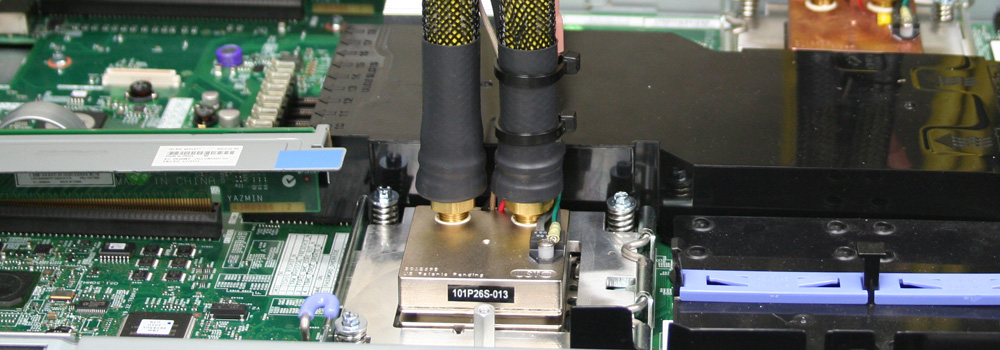
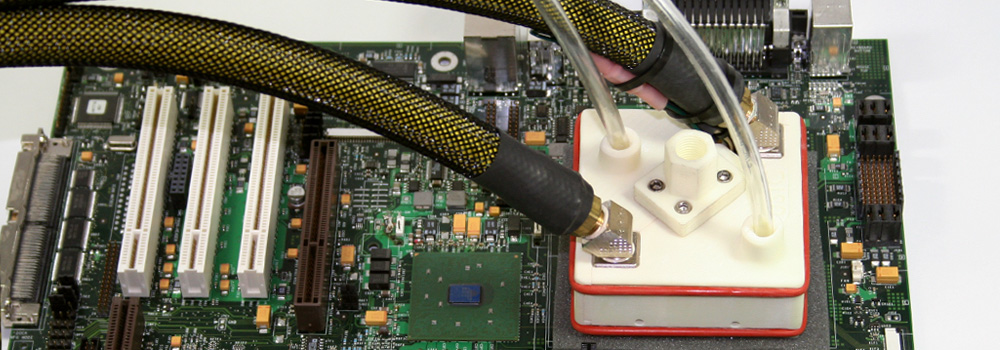
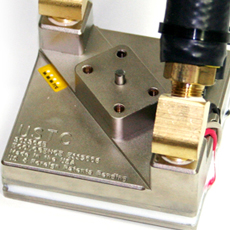
The Thermal Head is used to actively manage the DUT thermals and is specifically designed to operate in a temperature range to satisfy specific test requirements, i.e. hot; cold; or thermal cycling. Every TH model has unique PID values programmed into a controller for optimal performance.
*One or more of the above-identified products are covered in whole or in part by one or more pending patent applications.
Styles:
Standard
The standard TH is comprised of a heat spreader, TEM and fluid heat sink. The heat spreader is a heat-transfer medium between the DUT and TEM (or TEM assembly). The TEM provides the actual heating or cooling of the DUT.
Fluid
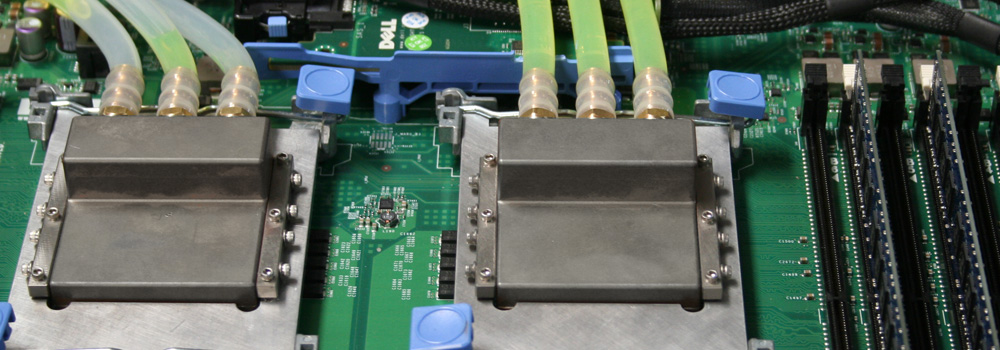
The fluid TH is comprised of a heat spreader, TEM, and fluid heat sink. The TEM provides the actual DUT heating or cooling. Some designs also incorporate resistive heaters to heat and cool a DUT. The heat spreader is a heat-transfer medium between the DUT and fluid heat sink. The fluid heat sink provides the actual DUT heating and cooling. Cooling is accomplished by having chilled thermal fluid pass through the heat sink. Heating involves regulating the thermal fluid flow to the heat sink by means of controlled FBA valves, and having TEM and resistive heaters heat the thermal fluid.
Air Cooled
The air cooled TH is similar to earlier generation USTC products known as the IsoSink and ISPT. This style involves a heat spreader, TEM, heat sink and a fan. The heat spreader is used as a medium between the DUT and TEM. This type of TH does not have a fluid heat sink, does not require a TCS or chiller for operation, and is used on a low power DUT.
|